

In the world of non-ferrous metals, two alloys stand out as the pillars of human history and modern engineering: Brass and Bronze. To the untrained eye, they can look similar; both are reddish-gold metals used in everything from statues to ship propellers. However, confusing one for the other in a manufacturing context can be a costly mistake.
While they both share Copper as their base element, they are chemically distinct alloys with vastly different properties. One is the king of corrosion resistance in saltwater; the other is the champion of machinability and aesthetic decoration.
At Castech, we cast both alloys daily. Whether we are producing high-strength Bronze Castings for the marine industry or decorative Brass components for architectural restoration, understanding the “DNA” of the metal is essential. This guide explains the technical differences between Brass and Bronze, and how to choose the right one for your casting project.
The Quick Answer
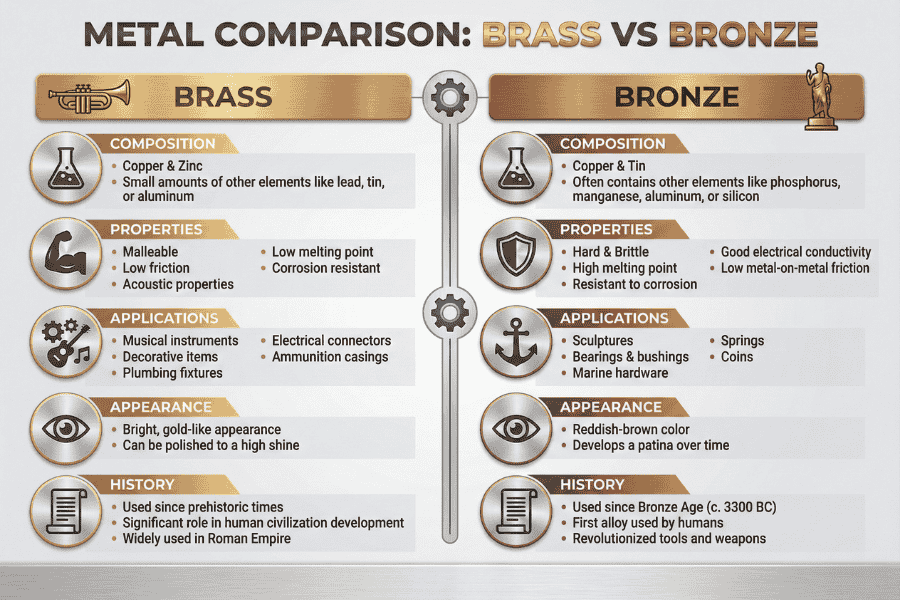
The primary difference lies in their alloying elements. Brass is an alloy of Copper and Zinc, making it lighter, more malleable, and yellow-gold in colour. It is ideal for decorative items, locks, and low-friction gears. Bronze is an alloy of Copper and Tin, making it harder, stronger, and reddish-brown in colour. It offers superior corrosion resistance (especially in seawater) and wear resistance, making it the standard for marine fittings, bearings, and sculptures.
The Chemistry: Zinc vs. Tin
To understand how they behave, we must look at how they are made.
What is Brass?
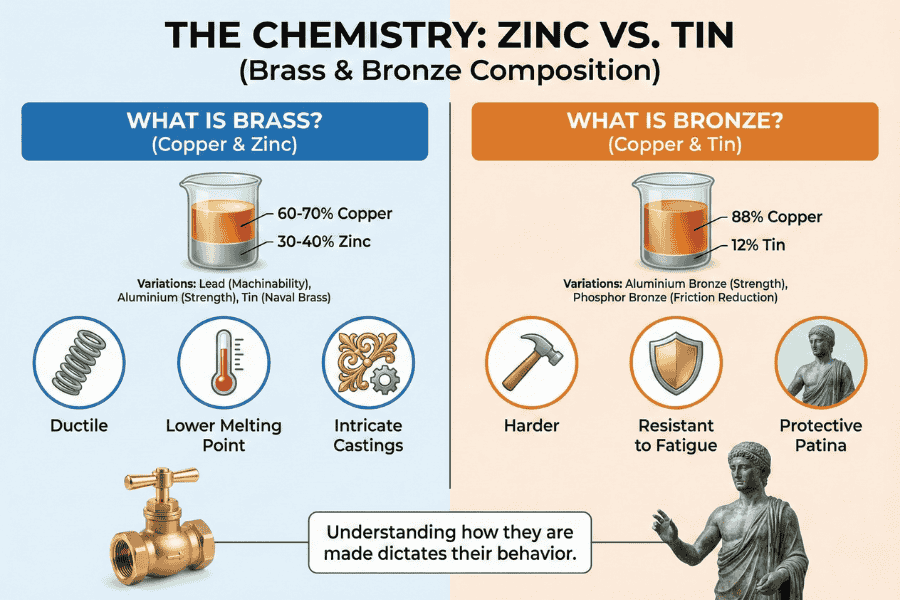
Brass is primarily a mixture of Copper and Zinc.
Composition: Typically 60-70% Copper and 30-40% Zinc.
Variations: Other elements like Lead (to improve machinability) or Aluminium (to improve strength) are often added. “Naval Brass” includes a tiny amount of Tin to help resist seawater, but it remains brass because Zinc is the main partner.
The addition of Zinc makes the metal more ductile and lowers its melting point, which makes it flow beautifully into moulds. This fluidity is why it is often used for intricate decorative castings.
What is Bronze?
Bronze is primarily a mixture of Copper and Tin.
Composition: Typically 88% Copper and 12% Tin, though this varies wildly.
Variations: Modern bronzes are complex. “Aluminium Bronze” replaces Tin with Aluminium for incredible strength. “Phosphor Bronze” adds phosphorus to reduce friction.
The addition of Tin creates a metal that is harder and much more resistant to fatigue than brass. It forms a protective “patina” (oxidation layer) very quickly, which acts as a shield against the elements.
Visual Differences: Colour and Finish
If you are a designer or architect, the aesthetic difference is just as important as the mechanical one.
Brass (Yellow/Gold) Brass has a bright, muted yellow colour that is very similar to gold. This makes it the preferred choice for musical instruments, door furniture, and decorative fittings. When polished, it is highly reflective. However, brass tarnishes relatively quickly if not lacquered, turning a dull, greenish-black.
Bronze (Red/Brown) Bronze has a much deeper, richer, reddish-brown hue. It looks “earthier” and warmer than brass. Over time, bronze weathers distinctively. It develops a stable, protective layer known as a patina, often turning a beautiful Verdigris green (think of old statues).
Mechanical Properties: Strength and Durability
When selecting a material for a functional component, mechanical performance is key.
Hardness and Wear
Bronze wins here. It is generally harder and more brittle than brass. This makes it exceptional for components that face constant friction, such as bearings and bushings. It resists “galling” (wear caused by adhesion between sliding surfaces) better than almost any other metal.
Brass is softer. While this makes it easier to machine (it produces short chips rather than long, stringy swarf), it means it will wear out faster if used as a high-load bearing.
Corrosion Resistance
Bronze is the marine standard. Copper alloys generally resist corrosion well, but chlorides (saltwater) attack Zinc aggressively. Because Brass contains a lot of Zinc, it can suffer from “dezincification,” where the saltwater eats the Zinc out of the alloy, leaving a porous, sponge-like copper mass that crumbles.
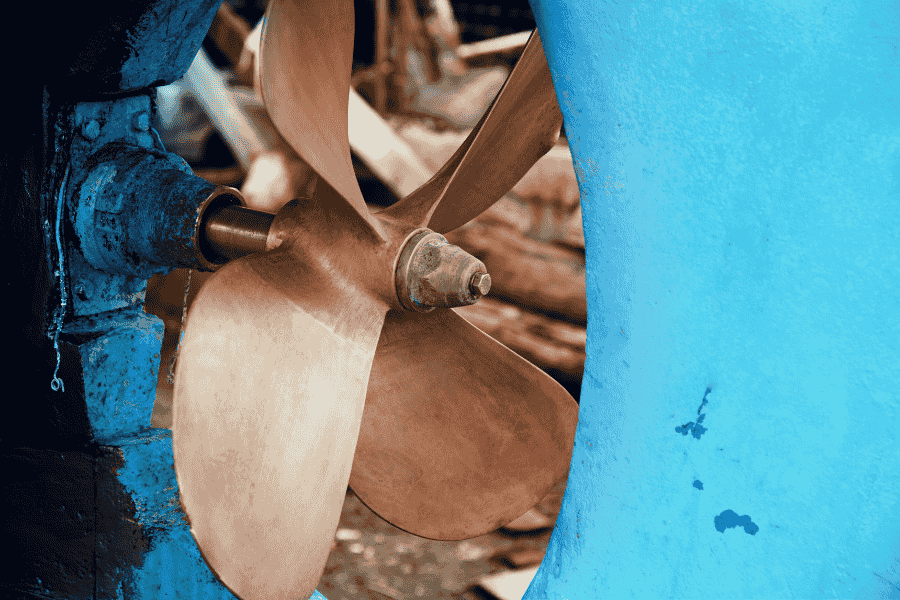
Bronze contains little to no Zinc. It forms a protective oxide skin that halts corrosion. This is why ship propellers, underwater valves, and sea-water pumps are almost exclusively cast in Aluminium Bronze or similar bronze alloys.
Common Casting Alloys at Castech
We work with specific grades designed for the foundry process.
Common Brass Alloys
SCB3 (C85700): A leaded yellow brass. It machines beautifully and is perfect for plumbing fixtures and decorative hardware.
HTB1 (High Tensile Brass): Often called “Manganese Bronze” (confusingly, as it is technically a brass). It is incredibly strong and used for heavy-duty brackets and levers.
Common Bronze Alloys
LG2 (Leaded Gunmetal): The classic “red metal.” It is excellent for pressure-tight pump bodies and valves.
AB2 (Aluminium Bronze): The heavyweight champion. It has strength comparable to some low-grade steels but with superior corrosion resistance. It is used for propellers and heavy industrial machinery.
PB1 (Phosphor Bronze): Hard and tough, used for gears and worm wheels where wear resistance is paramount.
Choosing the Right Process
Both metals can be cast, but their thermal properties dictate the method.
Sand Casting: This is the workhorse for both alloys. Sand Casting handles the high melting temperatures of bronze (around 1000°C) effortlessly. It is ideal for low-volume, large components like statues or pump housings.
Investment Casting: For smaller, intricate parts, Investment Casting (Lost Wax) is ideal. It captures the fine detail of decorative brass perfectly and provides the smooth surface finish required for bronze architectural fittings without expensive polishing.
Gravity Die Casting: While commonly used for Aluminium, die casting Copper alloys is harder due to the high temperatures, shortening the tool life. However, certain Brass alloys can be die-cast for higher volume production runs.
| Feature | Brass | Bronze |
|---|---|---|
| Main Elements | Copper + Zinc | Copper + Tin |
| Colour | Muted Yellow / Gold | Reddish Brown |
| Corrosion Resistance | Good (Poor in saltwater) | Excellent (Great in saltwater) |
| Melting Point | ~900°C | ~950°C - 1050°C |
| Main Characteristic | Malleability & Aesthetics | Hardness & Durability |
| Typical Uses | Door handles, instruments, fittings | Propellers, bearings, sculptures |
Conclusion
The choice between Brass and Bronze is rarely a coin toss. It is a calculated decision based on the environment the part will live in and the job it needs to do.
If you need a component that looks like gold, machines easily, and lives indoors, Brass is your cost-effective solution. If you need a component that must survive underwater, endure heavy friction, or last for centuries as a statue, Bronze is the undisputed choice.
At Castech, we have decades of experience manipulating the chemistry of Copper alloys. Whether you need the high tensile strength of Aluminium Bronze or the decorative flair of Yellow Brass, we can guide you to the perfect material specification.